
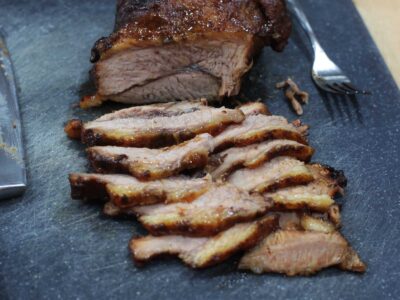
We moved again. The first truck delivered the furniture and big appliances exactly a week ago and here I am seven days later telling myself that there’s nothing about our old neighborhood that I miss. But that’s not a hundred per cent true.
I miss one household where husband and wife started their smoked meat business. We were regular customers and we found the beef brisket BBQ particularly good. On days when they did the cooking, the combined smell of meat, wood and smoke came in through our rarely open windows, and… It was so tantalizing that there were times when my husband and I talked about getting our own smoker — not for business but to learn the craft just for our enjoyment.
We never got a smoker though. It would just have been another expensive toy — thrilling until it wasn’t. I had this mental image of a smoker so often in use as we experimented with various meats, cuts and seasonings. Then, as the reality of cleaning the smoker and maintaining it in good condition sank in, smoking meat would become less and less frequent. And the smoker would just end up with the pile of forgotten appliances that lived in the gazebo. Perhaps, on top of the satellite dish that hadn’t seen action in over 15 years.
So, no smoker. But that was okay. Even before the husband-and-wife meat-smoking team moved to our neighborhood, I already had a cheat sheet for cooking beef brisket BBQ without a smoker. The smoky flavor comes out of a bottle.
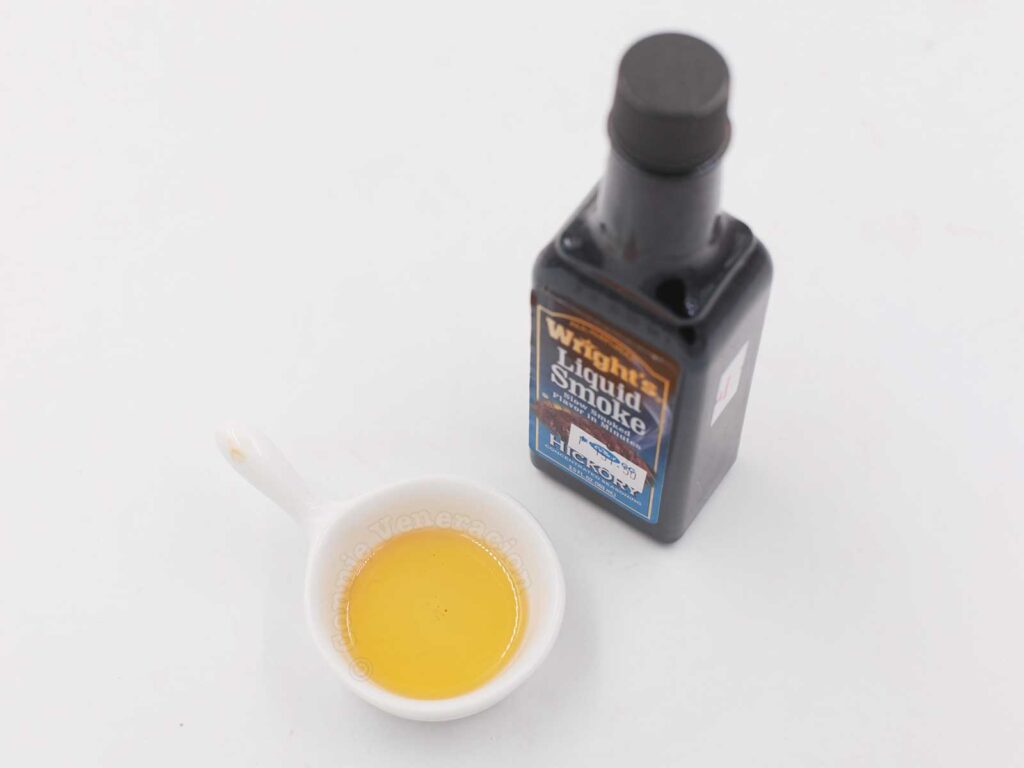
What is liquid smoke?
I am not a science person but, from what I’ve read, liquid smoke is the “modern name” for pyroligneous acid (wood vinegar or food vinegar), an ancient preservative. Its earlier mention goes back to Pliny the Elder (AD 23–79). According to his writings, pyroligneous acid was used an embalming agent.
Liquid smoke is produced by concentrating the vapors of wood smoke. For the non-science people like me, here’s the way I understand it: Wood contains moisture. When it burns, there is steam in the smoke. That steam is gathered in condensed form and that is liquid smoke.
The term “liquid smoke” came into use when E. H. Wright (yes, the name in the bottle in the photo above) started selling the stuff commercially in 1895.
Is liquid smoke safe to ingest?
We’ve all heard claims that smoked food contains carcinogens. Personally, I tend to laugh at people for whom just about anything is potentially cancerous. To this day, not one scientist has been able to pinpoint to exact cause of cancer. And for a disease with an unknown cause, it sure as hell is funny how many things have been declared as carcinogenic.
So, is liquid smoke safe for human consumption considering that it was once used for embalming?
Well, first of all, the production of liquid smoke has advanced and has been standardized since the time of Pliny the Elder. Here is a link to a study conducted by the U.S. Food and Drug Administrationwhich, essentially, says it is safe for human consumption.
Various evaluations relating to specific liquid smoke products were likewise conducted in Europe (link to one of them) which are on a case to case basis. The bottom line, only liquid smoke products that have undergone evaluation by the European Food Safety Authority (EFSA) are authorized to be sold.
What are the best practices for using liquid smoke for home cooking?
When using liquid smoke with meat to give it a flavor as though it was car grilled, the content of the bottle has to be applied topically— on the surface of the meat itself. You can do that by mixing liquid smoke in the marinade or by brushing it on the meat during cooking.
After the first time we bought Wright’s Liquid Smoke, we had to experiment on how to use it. The first time, we used too much and the flavor of the meat was much too strong — bordering on nasty, in fact. The second time, the result was simply superb. My daughter, Alex, used one tablespoon of liquid smoke for one-and-a-half kilos of pork ribs.
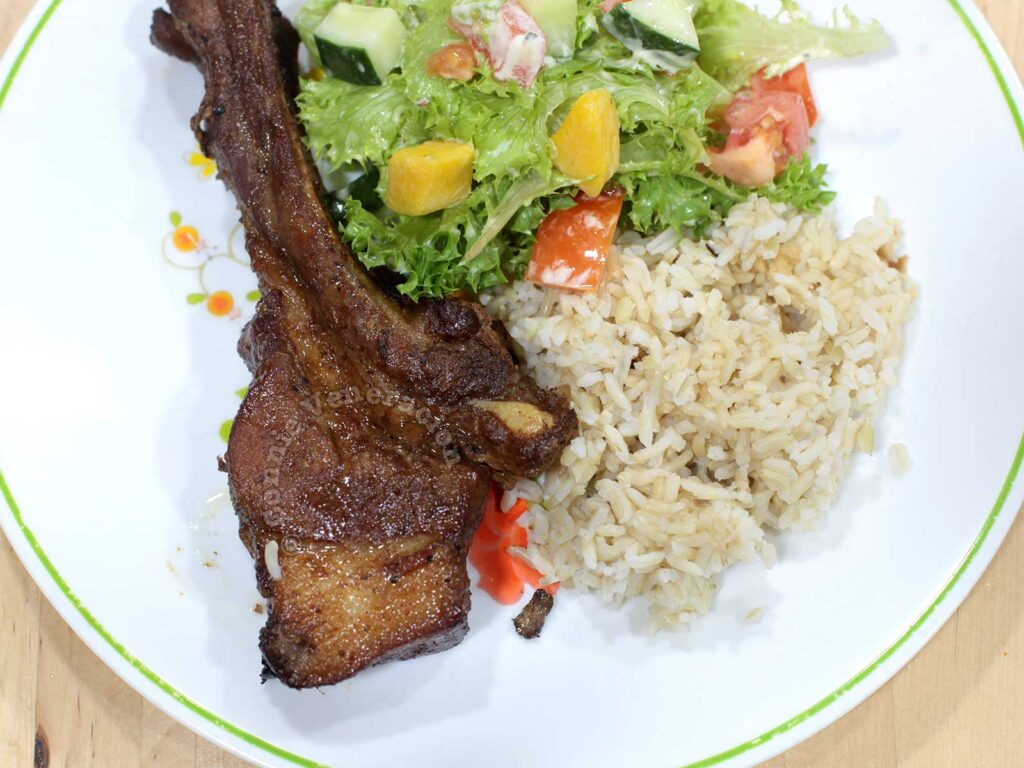
Alex mixed the liquid smoke with the marinade and soaked the pork ribs in the fridge overnight. The following day, she drained the ribs, arranged them on a single layer in a baking tray, wrapped the tray tightly with aluminum foil then baked the ribs in the oven at 300F for two hours. The foil was stripped off, the oven temperature was raised to 400F and the ribs were allowed to brown for another 10 to 15 minutes. And that is the superb result. Tender meat with a hint of smokiness.
Remember: the trick in using liquid smoke is to use it sparingly. One tablespoon for a kilo and a half of meat is just right.
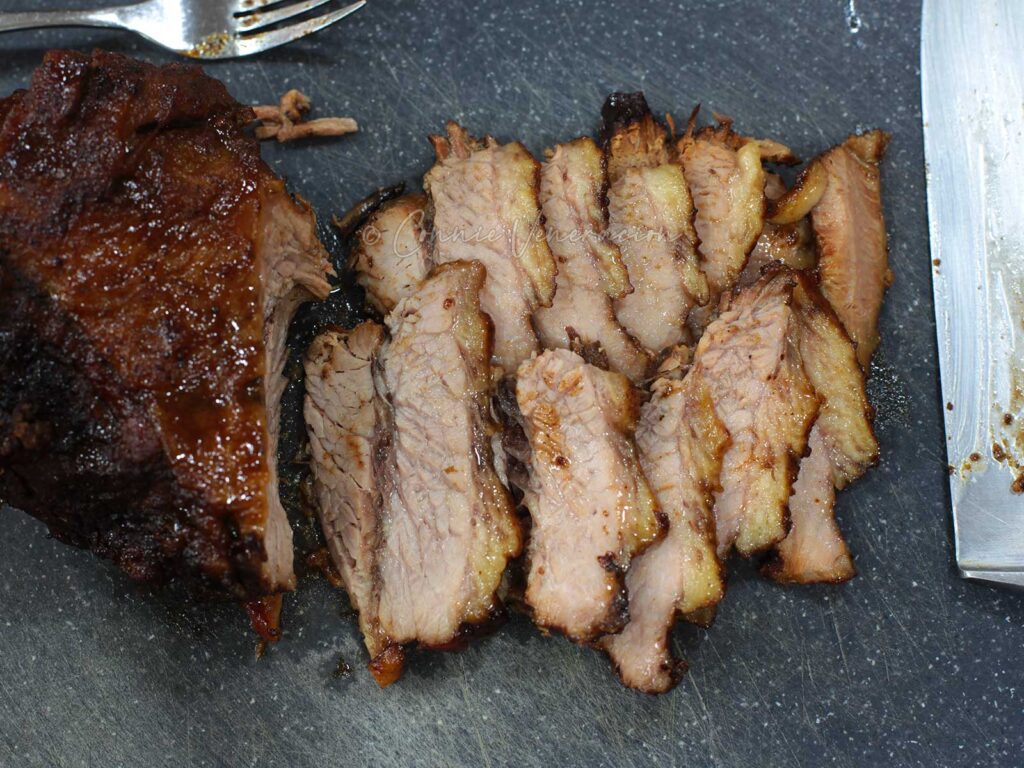
Since we learned now to properly use liquid smoke, I had been using it to cook beef brisket BBQ in the slow cooker. I call it, quite simply, slow cooker beef brisket BBQ. We pair the sliced tender meat with melt-in-the-mouth fat with rice, bread or mashed potatoes, or use it in even more interesting ways.
Recipes with slow cooker beef brisket BBQ


 The curious name of bang bang chicken