
March, 2019. Ho Chi Minh City. I still call it Saigon though. A result, perhaps, of listening to Billy Joel’s Goodnight Saigon for decades, and watching Lea Salonga in Miss Saigon and playing the soundtrack more times than I can remember.
Ahhh… But this is about Vietnamese coffee and the class we attended.
Why a coffee class in Vietnam?
Most people would “get” why Alex and I went to a cooking class in Vietnam but why a coffee class? Two reasons.
First, we love cà phê đá and we wanted to learn how to make it the “right” way You know, the real Vietnamese way.
Second, Vietnam is one of the largest producers of coffee and Vietnamese coffee beans are famous. Why not acquaint ourselves with Vietnamese coffee?
A short story about coffee and how it came to Vietnam
Has coffee been grown in Vietnam for a long time?
Not that long.
A priest introduced coffee to Vietnam in 1857 in the form of a single arabica tree planted in the garden of a small church in the Vietnamese highlands. Ironic, really, considering that there was a time when the Catholic Church referred to coffee as “Satan’s drink.” It’s true. Drinking wine was associated with Jesus while coffee was a drink popular in the Arab world.
So, I just found it both amusing and ironic that it was a priest that brought coffee to Vietnam where its cultivation thrived to become one of the country’s most significant agricultural products and exports.
The coffee class
Finally, it was time for class at The Yellow Chair. There were just Alex and myself to learn about coffee that morning. We felt pampered.
We were handed “cupping forms” to document our description of five varieties of beans.
First, we smelled the beans in their dry state.
Next, hot water was poured over the beans, we smelled them again and documented our observations.
As it turned out, Alex could identify the superior beans just by smelling. I failed.
The bottom line? High grade coffee smells more herby than nutty. If the beans smell chocolate-y, they’re more likely to be soybeans to which flavorings have been added.
Making cà phê đá, Vietnamese iced coffee
Making a good cup of coffee is not a lot different from making a good cup of tea. The proportion between water and coffee should be correct. The temperature of the water must be lower than its boiling point (after the water boils, count 40 seconds before using and the temperature should be just about right). The filter and the cup must be warmed before the ground coffee is added. The coffee must be allowed to “bloom” before the actual brewing begins.
Now, with photos.
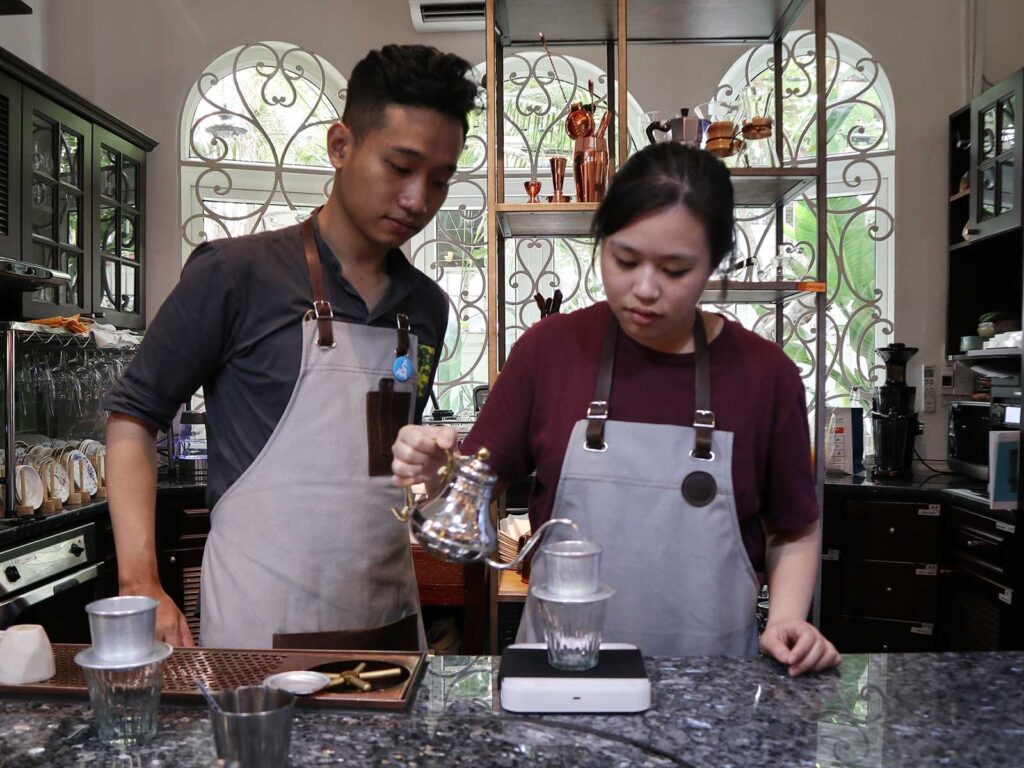
Warm the filter and cup. Place the coffee filter (phin) over a glass or cup. Pour hot water into the filter and let the water drip into the glass or cup. Throw out the water.
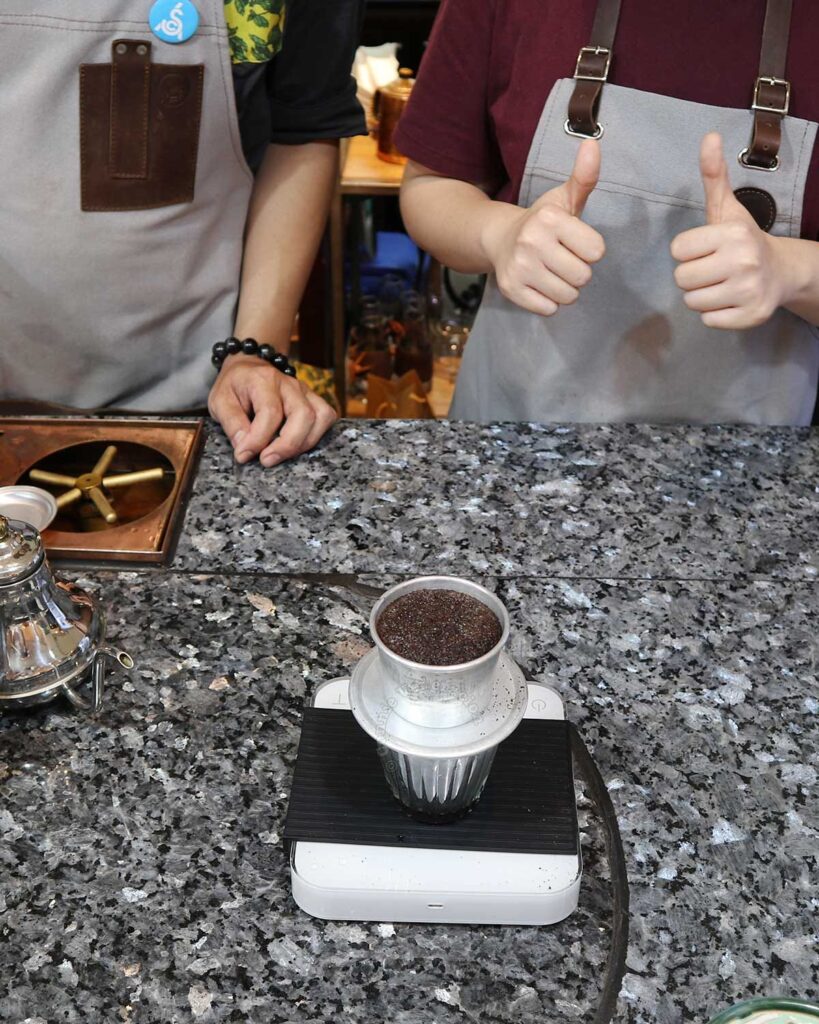
Re-position the filter on top of a cup or glass, pour the pre-weighed ground coffee into the filter and add just enough water to cover. Leave for a minute or so to “bloom”. If the coffee is fresh, bubbles (like froth) will form on the surface.
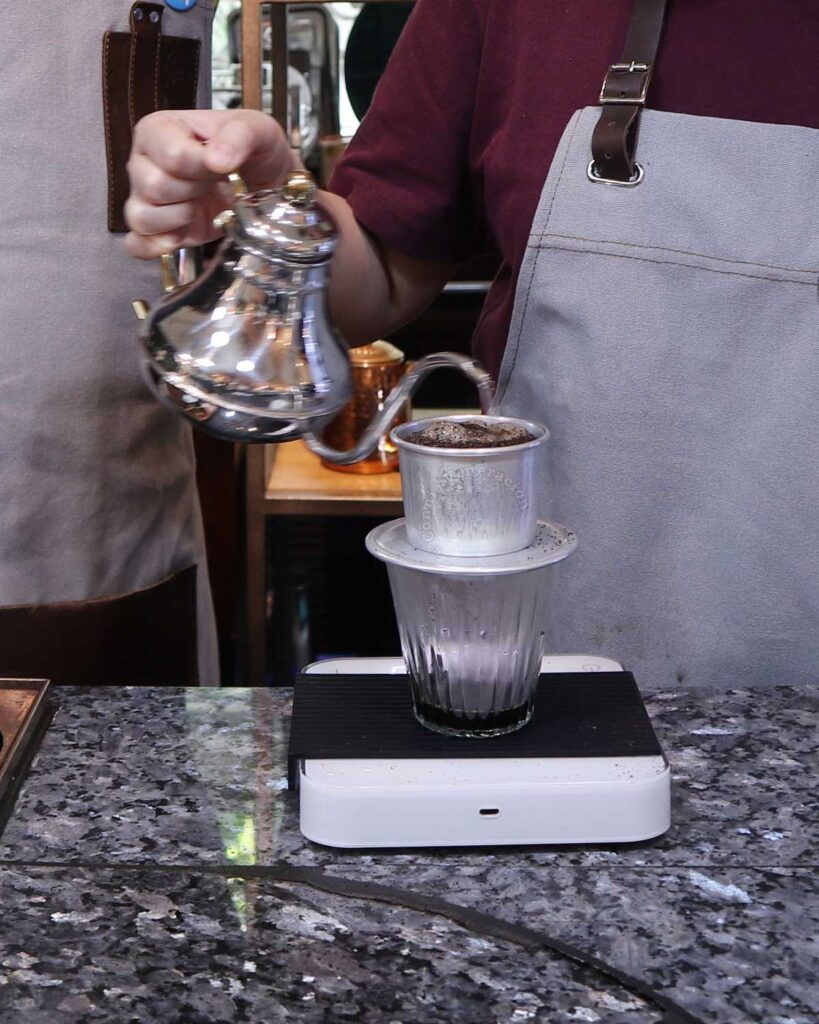
Fill the filter with water.
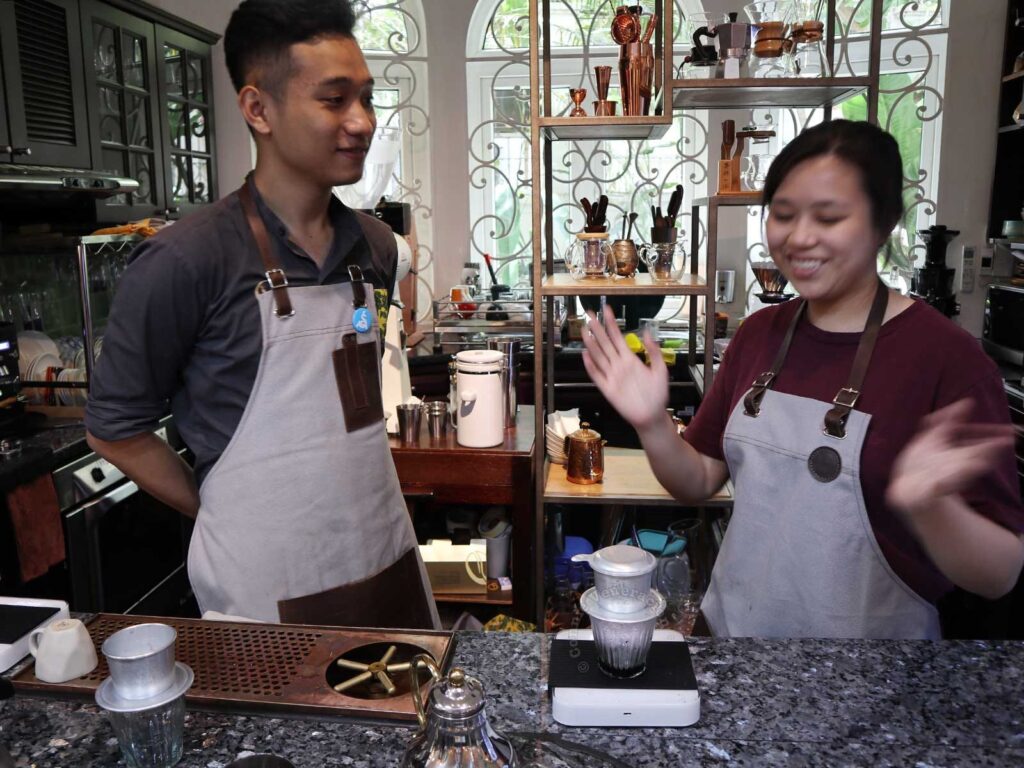
Cover the filter and let the coffee drip into the glass (or cup) underneath.
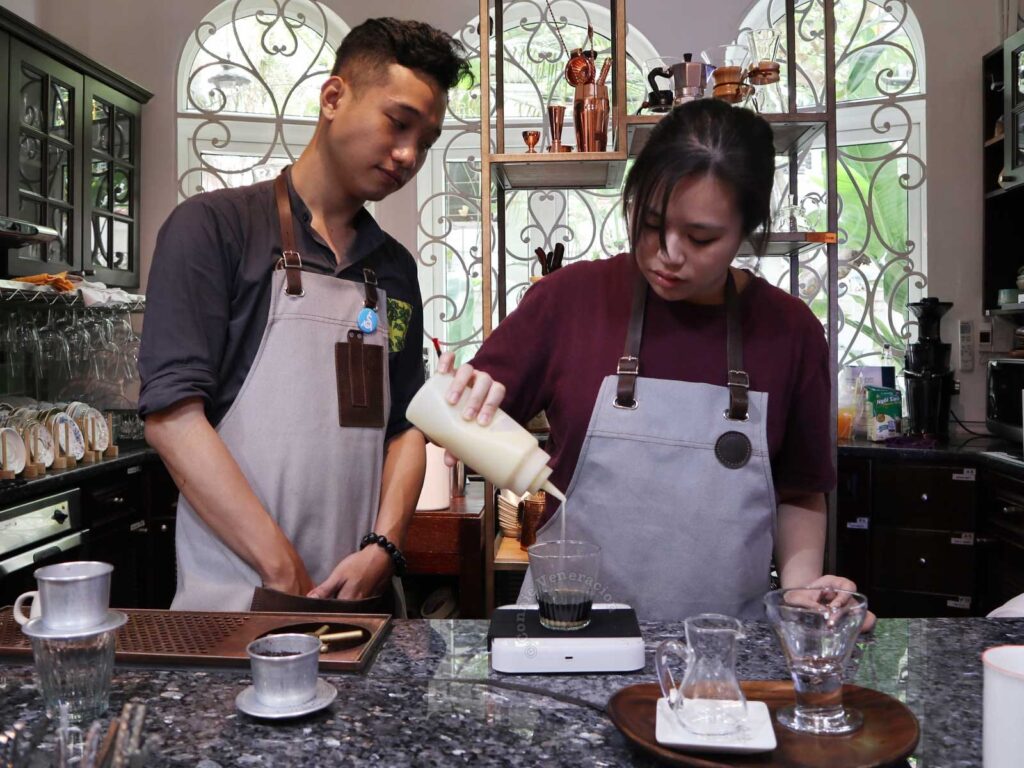
When the coffee has finished dripping into the cup or glass, remove the filter. Add sweetened condensed milk to the coffee.
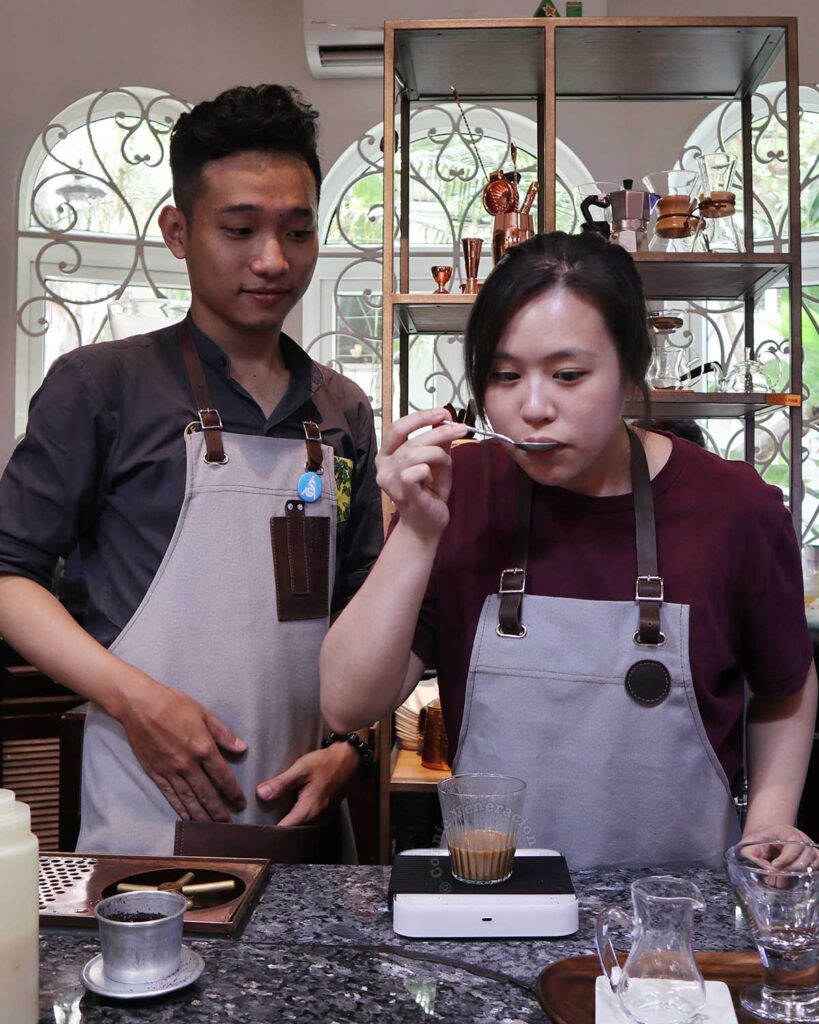
Taste the coffee. Add more sweetened condensed milk if you like.
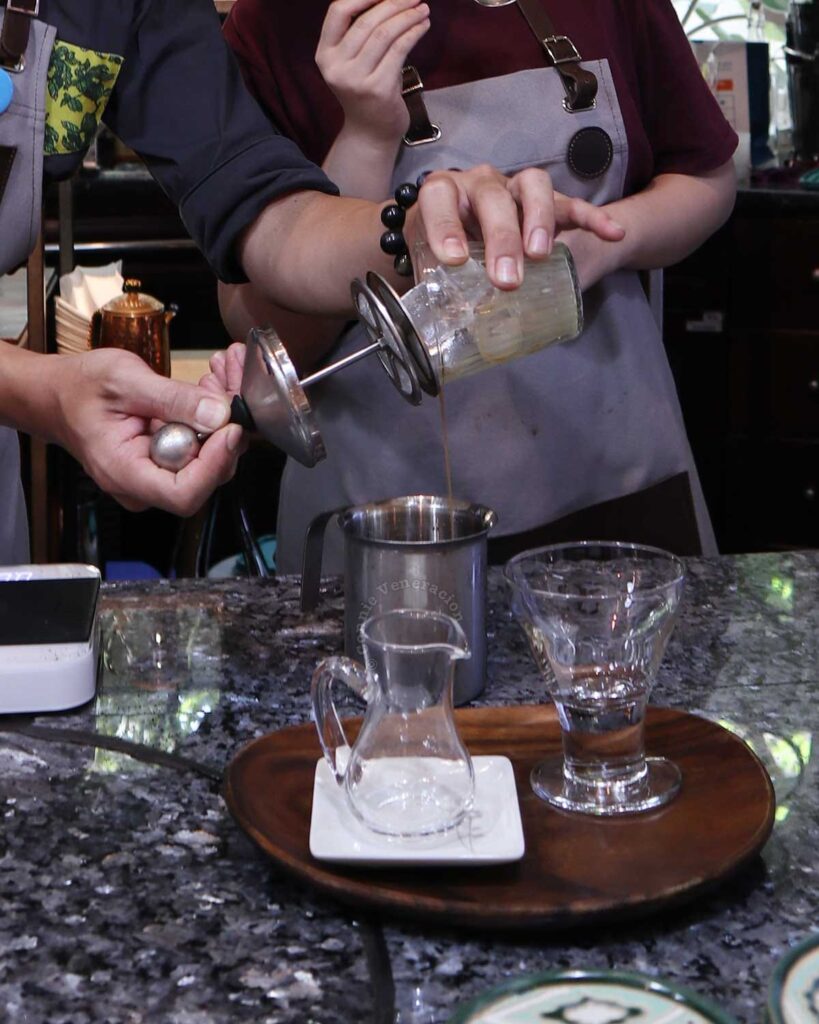
Cool the coffee by adding ice. Then, filter into the frothing cup. Discard the ice.
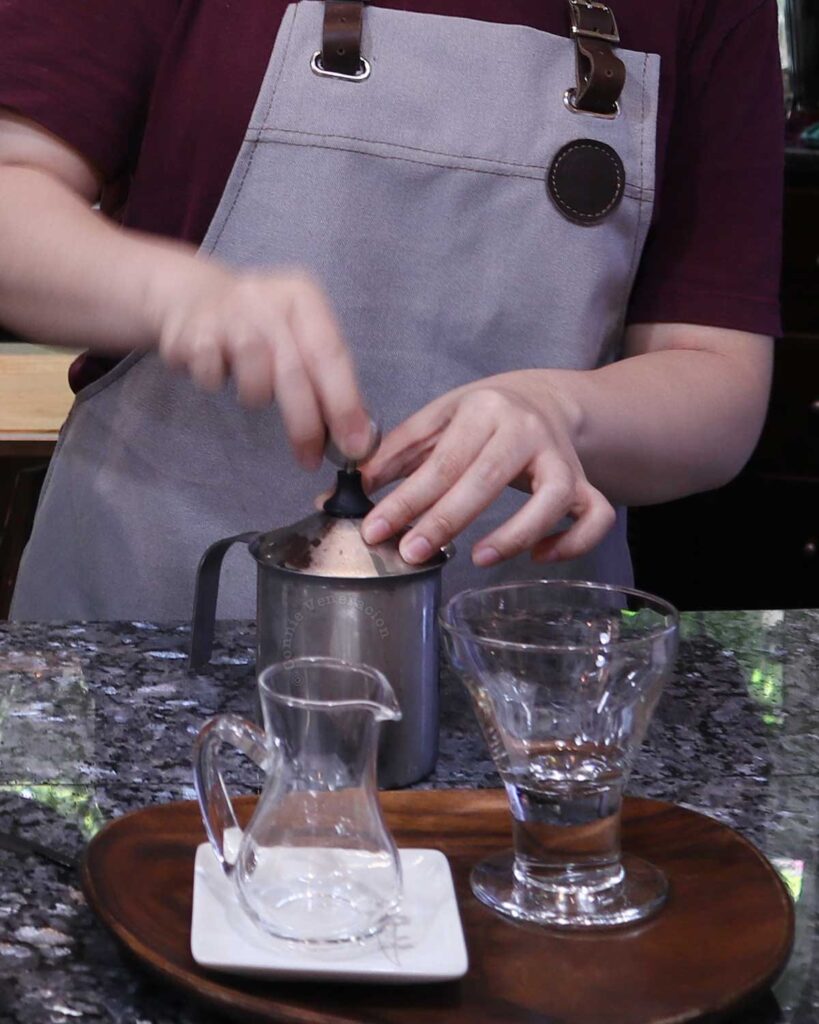
Lighten the texture of the cooled coffee by aerating. At The Yellow Chair, this is done with a tool that looks like a vegetable chopper except that, instead of blades, the underside of the cover is a like a screen. By pushing and pulling the handle, the coffee passes through the screen continuously and, in the process, acquires a lighter texture.
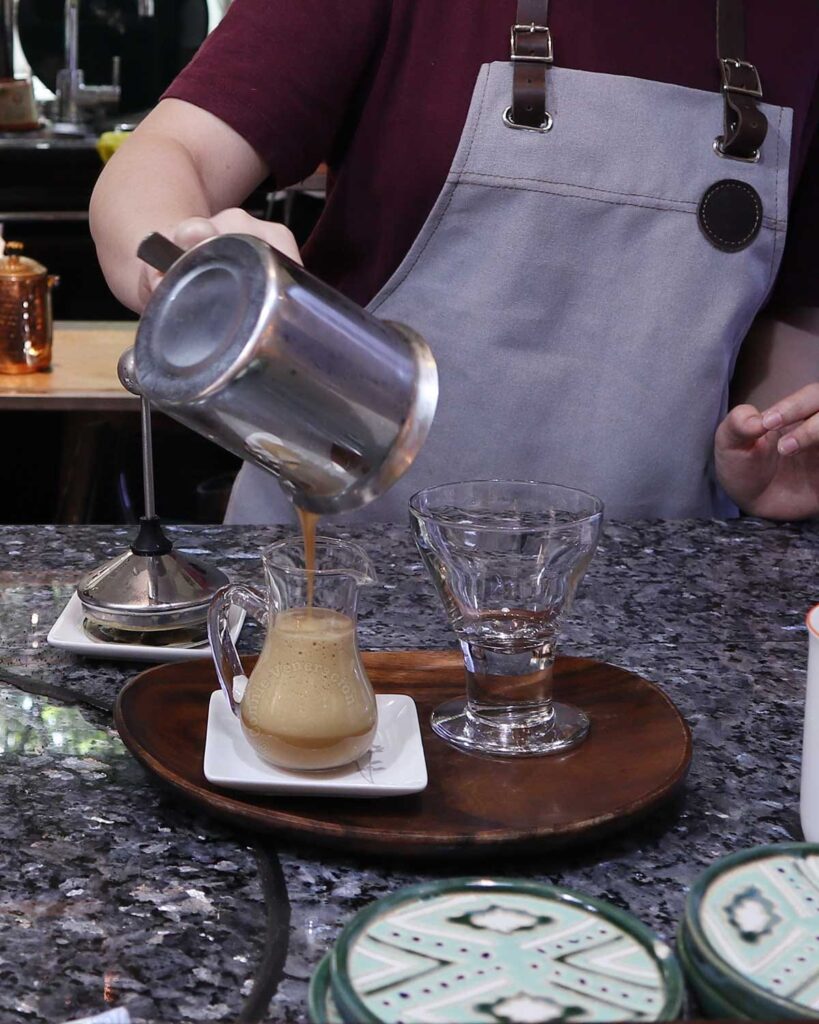
Pour the coffee into a carafe.
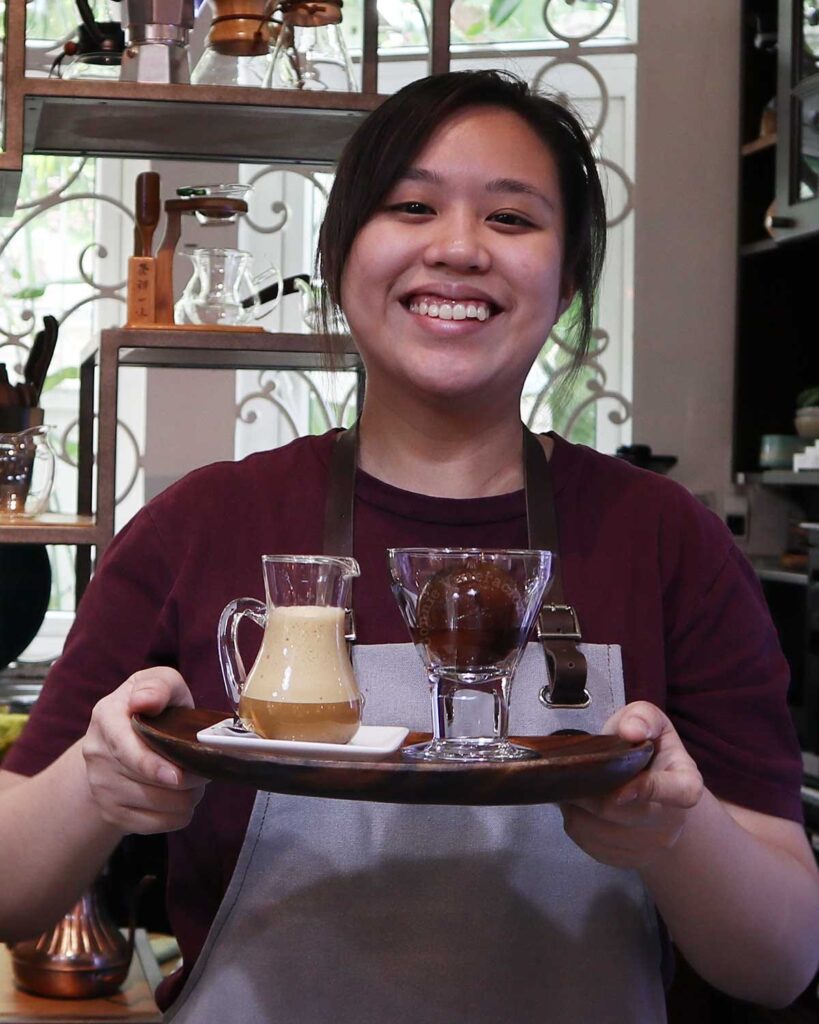
And serve with ice. Not just any ice though. At The Yellow Chair, instead of plain ice, frozen coffee was dropped into the drinking glass. We were told that this prevents the coffee from getting diluted and turning bland as it gets cold.
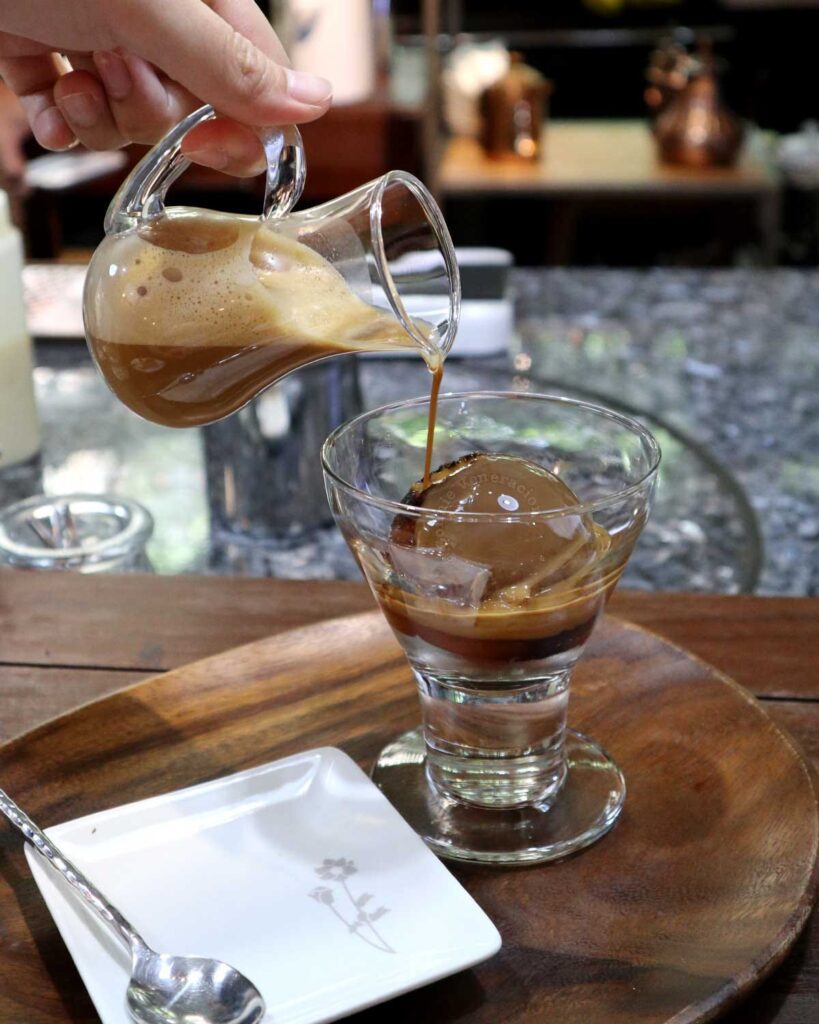
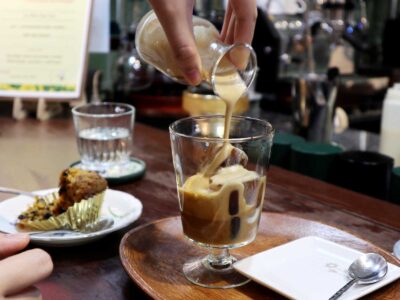
Pour the aerated coffee with condensed milk over frozen coffee. And you have cà phê đá, the famous Vietnamese iced coffee with sweetened condensed milk.





 The civet coffee hype