
Know exactly what you’re getting. Sago and boba are not the same. There is a disctinction between bubble tea and milk tea. Boba shakes do not contain real tea.

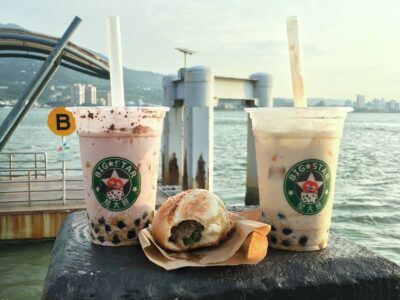
Tamsui waterfront, 2019. Speedy had just queued up for pork buns while I took a video of how they were made. We decided to pair them with bubble milk tea and enjoy our bread and drinks while gazing at the river. It was a beautiful moment.
Not that the food and drink were new to us. Pork buns are a-plenty in Asia and the Taiwanese version is just one among many. It wasn’t our first milk tea experience either much less our first encounter with the chewy spheres that have captivated the world.
Bubble tea was invented in Taiwan in the 1980s. Who exactly invented it is a subject of debate. But its popularity grew by leaps and bounds, and the sweet drink found its way to other Asian countries and beyond.
What are those chewy balls anyway? They’re tapioca pearls (or tapiocal balls) but they’re more popularly known as boba.
Boba (tapioca pearls) and sago are not the same thing
Tapioca pearls, as the name so obviously makes it clear, is made with tapioca, a starch extracted from cassava, a root vegetable. In commercial usage, however, they have somehow become interchangeable with sago. These days, buy sago and what you may be getting are tapioca pearls instead. And vice versa.
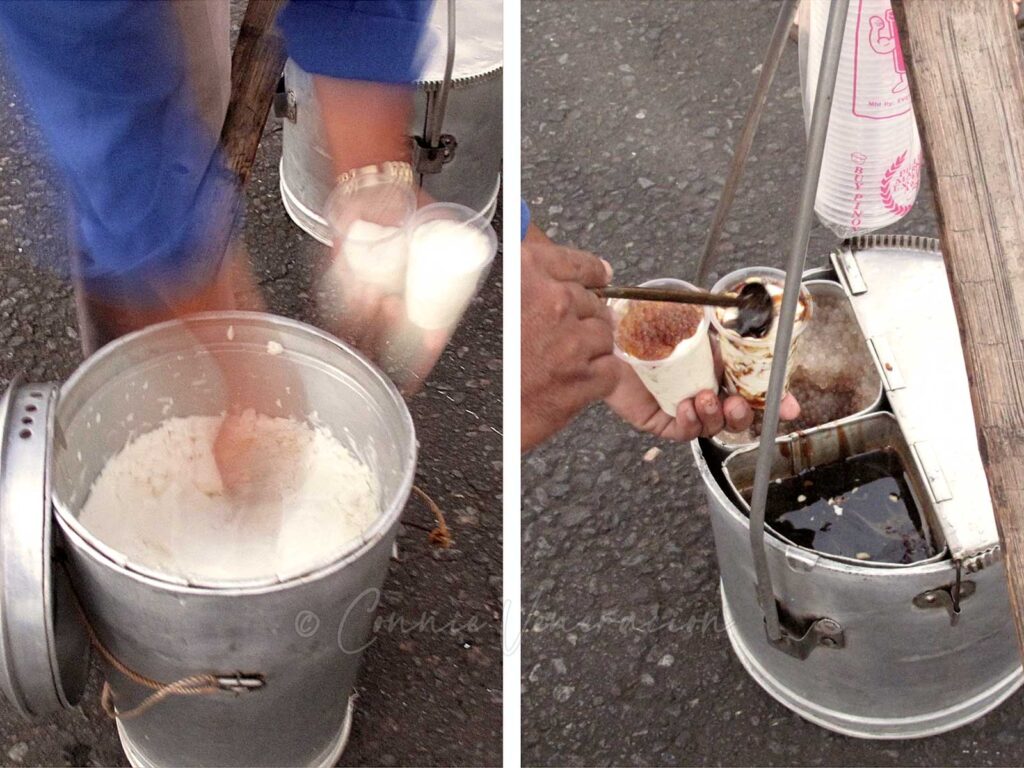
Sago comes from the sago palm Metroxylon sagu. I’ve been enjoying sago far longer than boba. When I was a child, summer afternoons were spent waiting for the ambulant taho vendor. Carrying two vats suspended on either end of a wooden stick, hail him and he laid down the vats, filled your mug with soft bean curd, doused it with brown sugar syrup and topped it with sago. It was one of our most beloved mid-afternoon treats.
By the time I was in high school, I would become acquainted with another form of street food that featured sago. A drink that was known by the name of its ingredients. Gulaman at sago. Cubes of agar-agar and chewy sago with iced water sweetened with brown sugar syrup.
So, yes, I grew up with sago. And my fascination with them, I carried to adulthood. There’s just something about them… Spongy outside and chewy towards the center. By themselves, they are flavorless. But combine them with something sweet and they become irresistible. Tapioca pearls are like that too. So, having been a sago fan for most of my life, when the boba craze hit the country, it was hard not to get caught in it.
Bubble tea, bubble milk tea and bubble shake are not the same
Bubble tea is sweetened and often fruit-flavored tea with tapioca pearls.
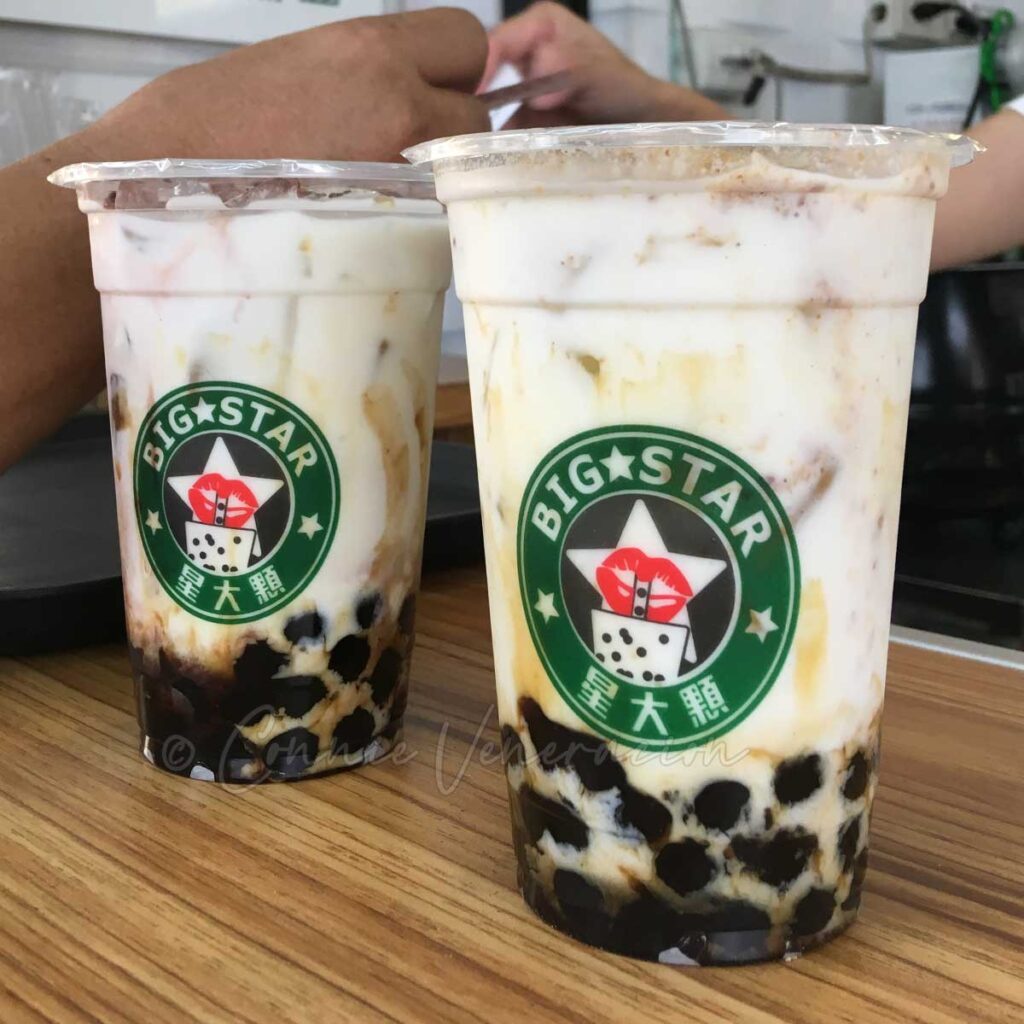
Tea, milk, sugar and tapioca pearls make up the basic bubble milk tea drink.
Boba shakes don’t contain tea. They are mostly milk, flavorings, ice and tapioca pearls. Think slushies with chewy balls mixed in.
Is bubble tea a healthy drink?
It is high in sugar. But there’s a workaround to make the drink less sugary. I learned that when my daughter, Sam, and visited Hanoi.
Across the street from our apartment in Hanoi, there was a bubble tea shop. Sam and I went there a couple of times. I was surprised that there was an option to cut down on the sugar. Want just half of the usual amount of sugar? Or just a quarter? Or no sugar at all? Just say so and that’s how your bubble milk tea would be mixed.
Sam, the most bubble milk tea obsessed member of our family, told me that it wasn’t exactly a new thing. She said, there are a lot of bubble milk tea stores that give customers the same option. Walking around Hoan Kiem Lake during the same trip, we escaped the afternoon heat for a few minutes by going inside a bubble milk tea shop that offered the same low-to-no-sugar options.
So, you see, if it’s about the sugar content, it may just be a matter of finding better bubble milk tea shops.

 In Taipei, we skipped the night markets and headed for Tamsui Old Street