
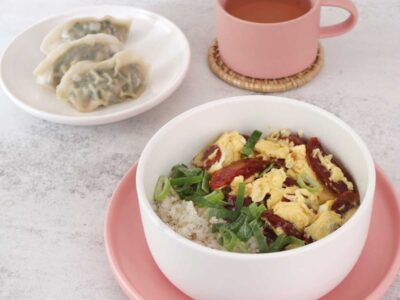
If you’re a tourist in the Philippines staying at a hotel or resort, and breakfast is a buffet affair, that might come as a surprise. But, really, most of the items you’ll find in a hotel or resort breakfast buffet in the Philippines are chosen to suit tourists’ preferences.
Filipinos are primarily rice consumers. Rice has been grown in the Philippines long before Ferdinand Magellan lost his way and landed in Central Philippines thinking he had arrived at the famed Spice Islands. Antonio Pigafetta, an Italian scholar who joined Magellan’s expedition as his documentarist, wrote about food eaten in the islands, including rice.
He compares the taste of rice cooked in a clay pot (kulon) lined with leaves and in a bamboo tube, and mentions other cereals such as millet, sorghum, and panicum. Pigafetta called steamed rice and millet cakes wrapped in leaves as tinapai and likened it to the wheat bread of Europeans.
“Long before 1521: Philippine food when Magellan arrived” in Vera Files
It’s been almost 500 years since and rice continues to be a staple in the Filipino diet. And because Filipinos are believers in starting the day with a hearty breakfast, rice is an important component of that meal.
What are today’s Filipino rice breakfasts?
It varies. A lot has to do with location and economic situation. In rural areas, especially where there is no electricity, dried fish (which does not require refrigeration) often accompanies rice. In poorer communities in urban areas, cooking a pack of instant noodles, and mixing the noodles and broth with rice for flavor is not an uncommon way for a family to start the day. For the more fortunate ones, there are choices.
Silog
Silog is a portmanteau for sinangag (fried rice) and egg. What protein goes with the rice and egg, whether meat, poultry or seafood, forms the first part of the name of the dish.
Tapsilog with tapa (marinated and lightly fried beef strips) has been around the longest. Longganisa (sausage), fried rice and egg is longsilog. When tocino (cured sweet pork) accompanies the rice and egg, the dish is tocilog.
Silog dishes are served at home, in the humblest eateries as well as in more posh restaurants. They are even served in high-priced hotels and resorts. And they have gone way past just being served in the morning. Silog dishes are available day and night. That’s how popular they have become. It’s a student meal, a laborer’s fare, an office employee’s breakfast or lunch… And for those who work at odd hours (like call center agents),silogis available at establishments that are open 24/7.
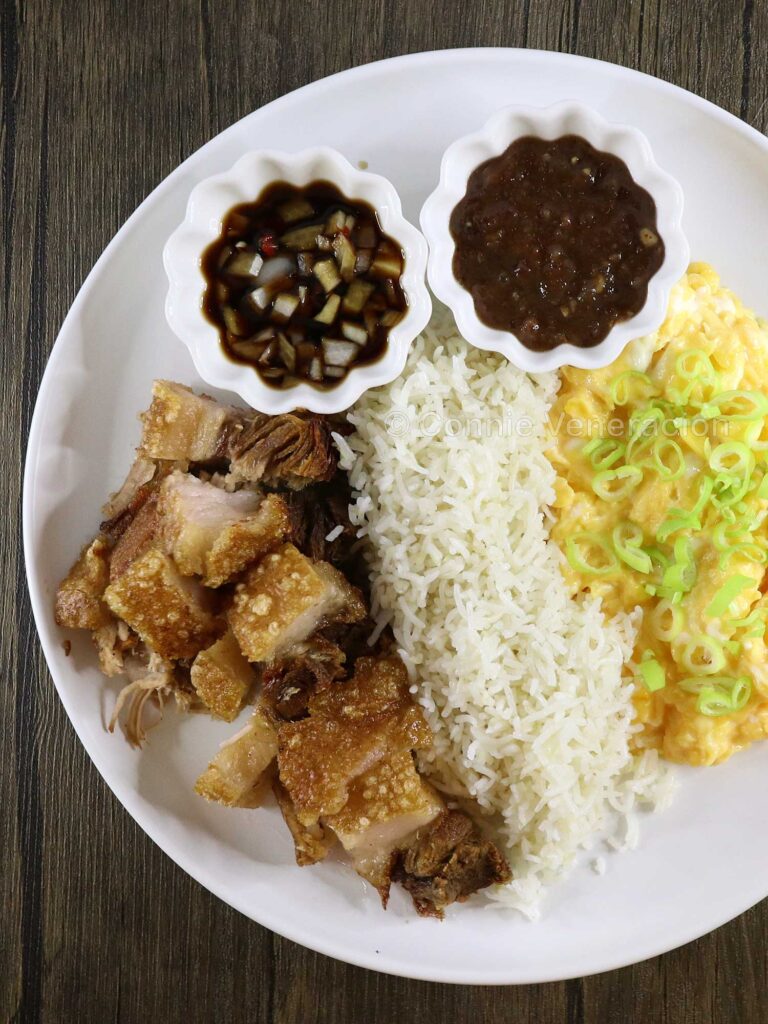
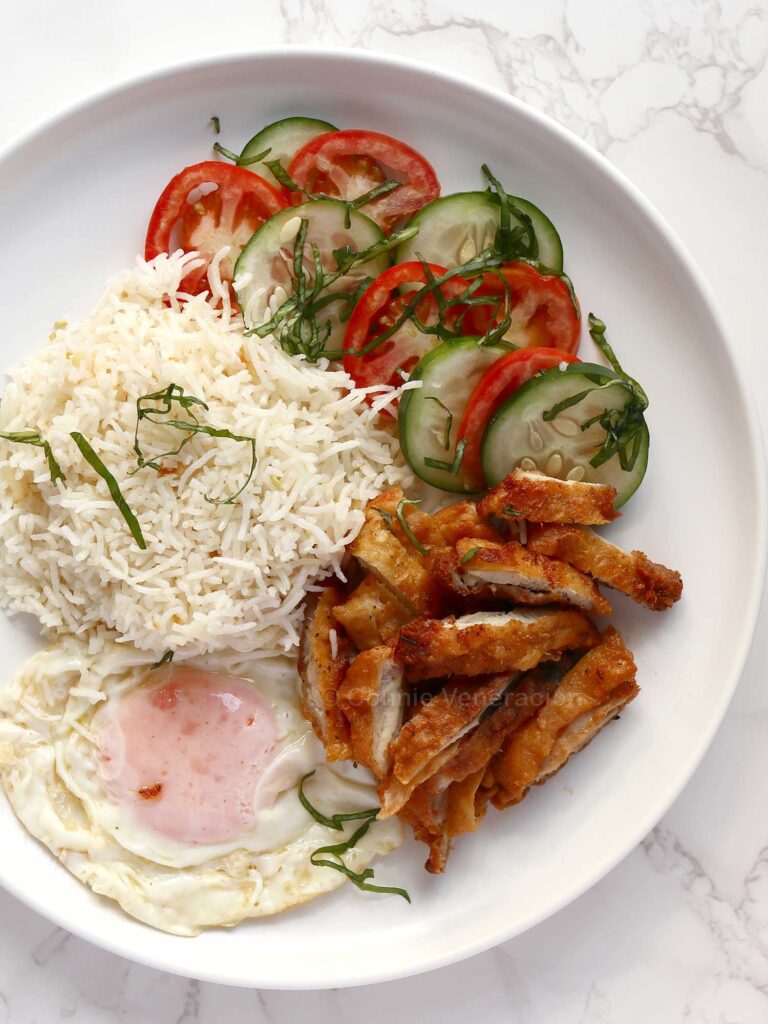
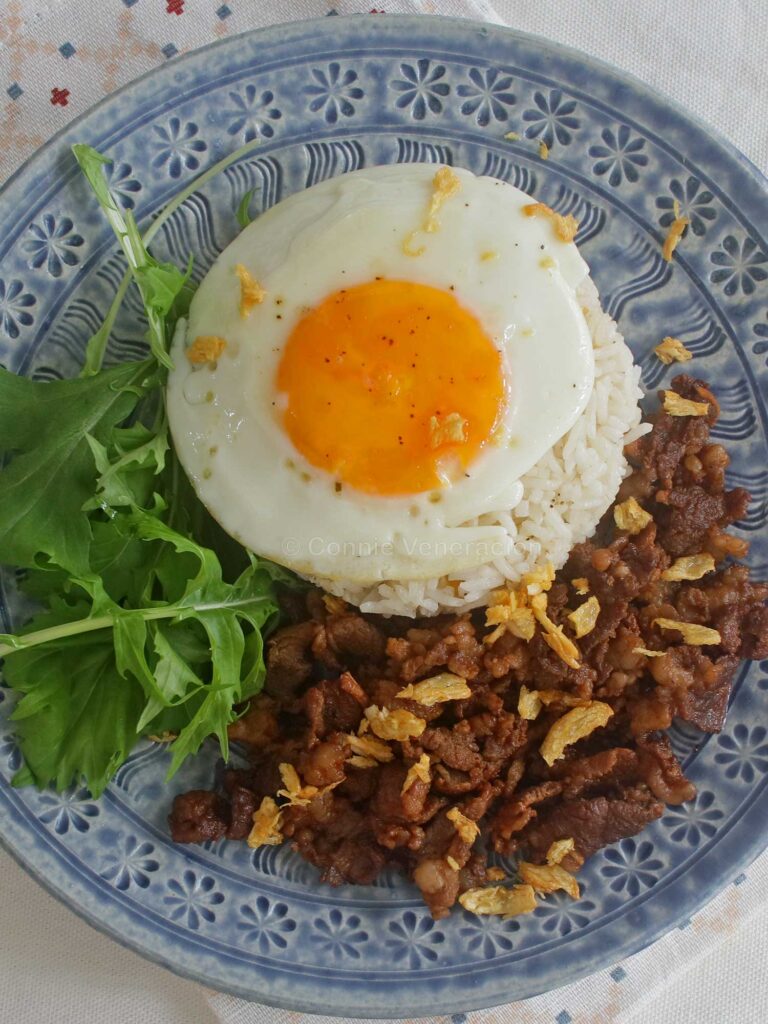
The popularity of silog breakfasts has given birth to countless variants. Bacon, pork adobo or chicken adobo, lechon, fried chicken, daing (fish, either dried or marinated), canned corned beef and Spanish-style chorizo have been combined with fried egg and rice to add to the array of silog dishes.
Lugaw
A less expensive rice breakfast is lugaw, the Filipino rice congee. Visit any public market and there’s bound to be at least one stall that serves nothing but lugaw. Scan eateries around schools and public buildings and you’ll likely find a lugaw seller nearby too.
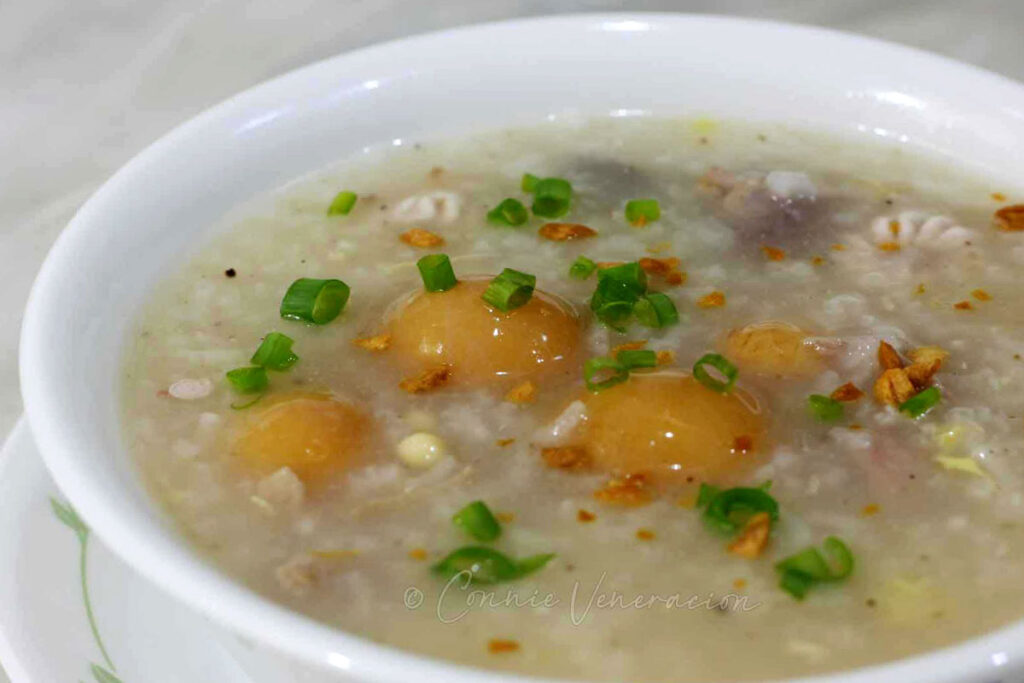
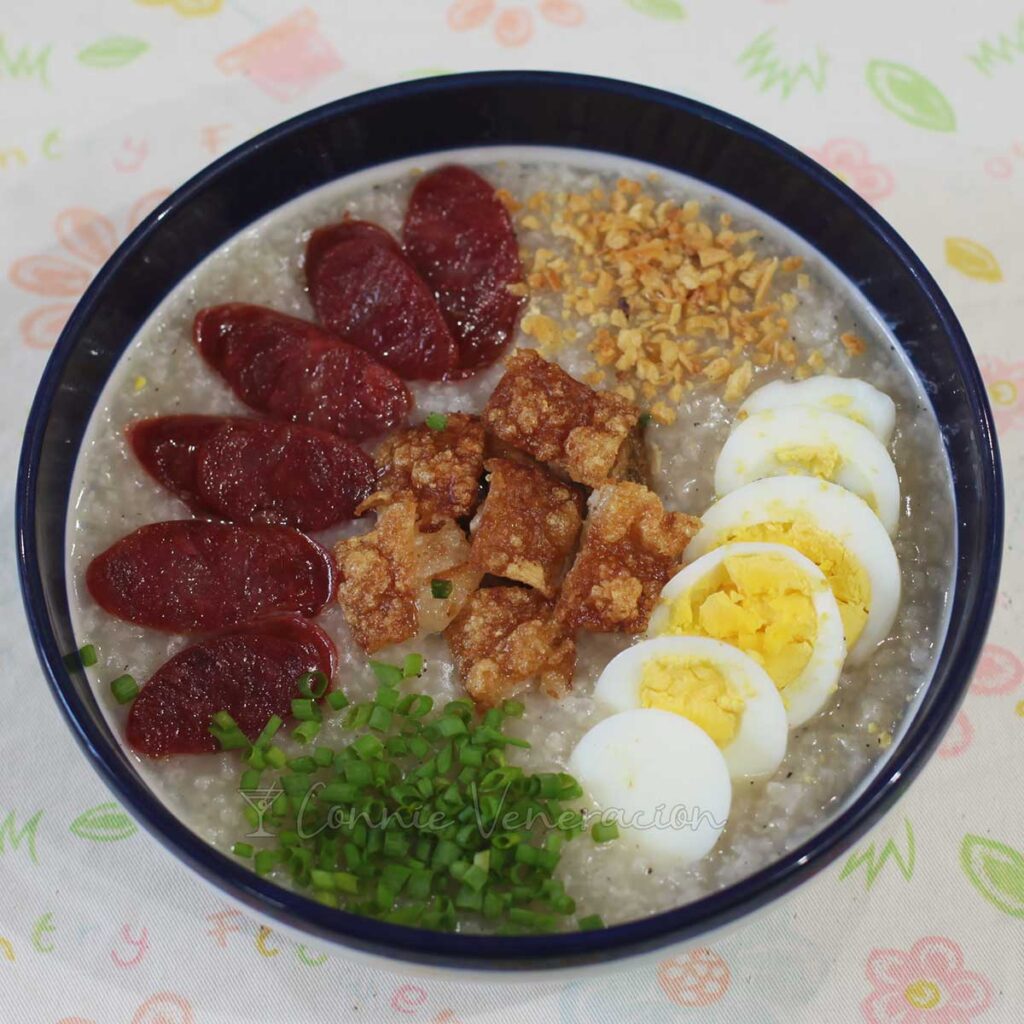
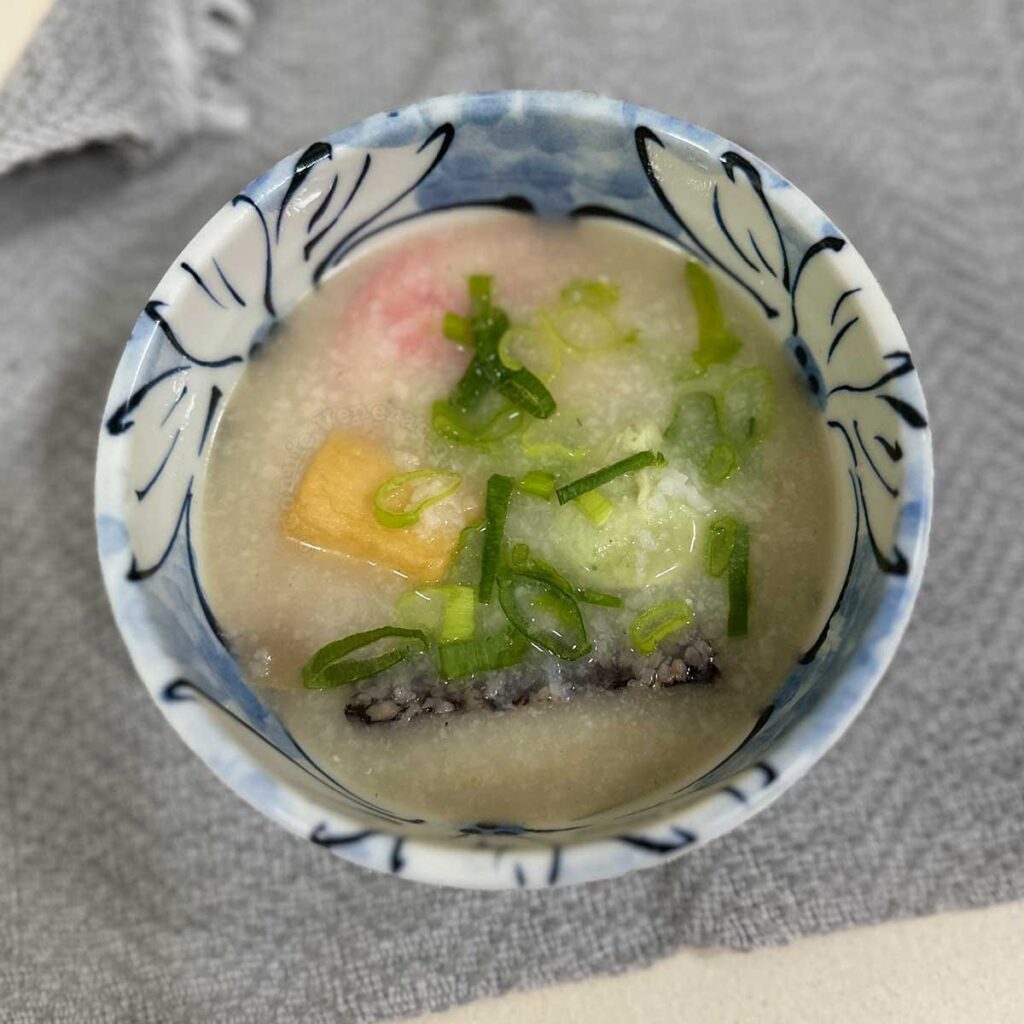
Depending on one’s budget, lugaw can be ordered plain or it can be accompanied by proteins in the form of egg or meat, or both. The rice can be cooked in water and seasoned, or it can be cooked with boney chicken parts. The more seasoned cooks add scrap beef or pork bones that add flavor to the rice, and cheap cuts of meat that get tenderized during the long cooking.
Not so dissimilar from the way the Chinese serve their congee. And there’s a reason for that. Long before the Spaniards invaded and colonized the country, the locals had been trading with the Chinese some of whom had settled in what would later be called The Philippines.
Pandesal
Bread made with wheat flour was unknown in the Philippines before the arrival of the Spaniards. With the colonizers came pan de suelo, the Spanish adaptation of the French baguette. It was the precursor to what came to be known as Filipino pandesal.
Filipino pandesal (from the Spanish pan se sal, so called because a pinch of salt was added to the dough) is a bun rolled in bread crumbs. It isn’t salty. In fact, it is a rather sweet bread. It is a mainstay in panaderias and it is available any time of the day.
The habit of eating pandesal for breakfast crosses social and economic classes. Rich and poor eat it but what they pair it with varies. For those with limited means, dipping the bread in a mug of hot coffee constitutes breakfast. For the more affluent, pairing it with eggs and meat like ham, bacon or sausages is more common.
Evolving Filipino breakfast habits
Lifestyle, media, advertising and easy access to convenience food have all contributed to today’s Filipino breakfast habits. If simply eating out on the way to work is a pricey option, for families without live-in domestic help, breakfast at home is rarely the same nostalgic experience of brewed coffee or hot chocolate, warm bread or newly cooked rice.
Cooking a pack of instant ramen in the microwave, opening a can of meat or just pouring milk into a bowl of cereals are fast becoming breakfast routines among busy families in big cities.
But if you have a friend with a house in the province where the mother, grandmother and aunts still putter in the kitchen at the crack of dawn, you might still get of taste of real home cooked Filipino breakfast.

 Suman: Filipino sticky rice cakes