
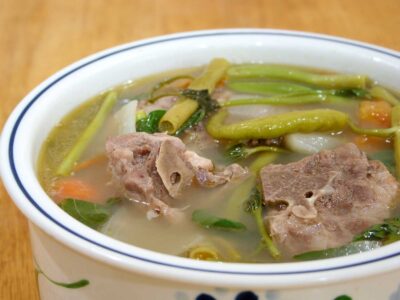
Sinigang is a vegetable soup with a salty-sour broth. Meat (usually bone-in pork) or seafood (shrimps or prawns are popular) traditionally accompanies the vegetables.
To cook the soup, onion, garlic and tomatoes are sauteed, the protein component — traditionally seafood or meat — is added, fish sauce is drizzled in to add saltiness and the protein is simmered until tender. Vegetables are added, the simmering continues and, finally, the souring agent is poured in to create a balance with the saltiness of the fish sauce.
So, sinigang as three components — protein, vegetables and souring agent — which all deserved a more detailed discussion in order to cook the dish properly.
The vegetables
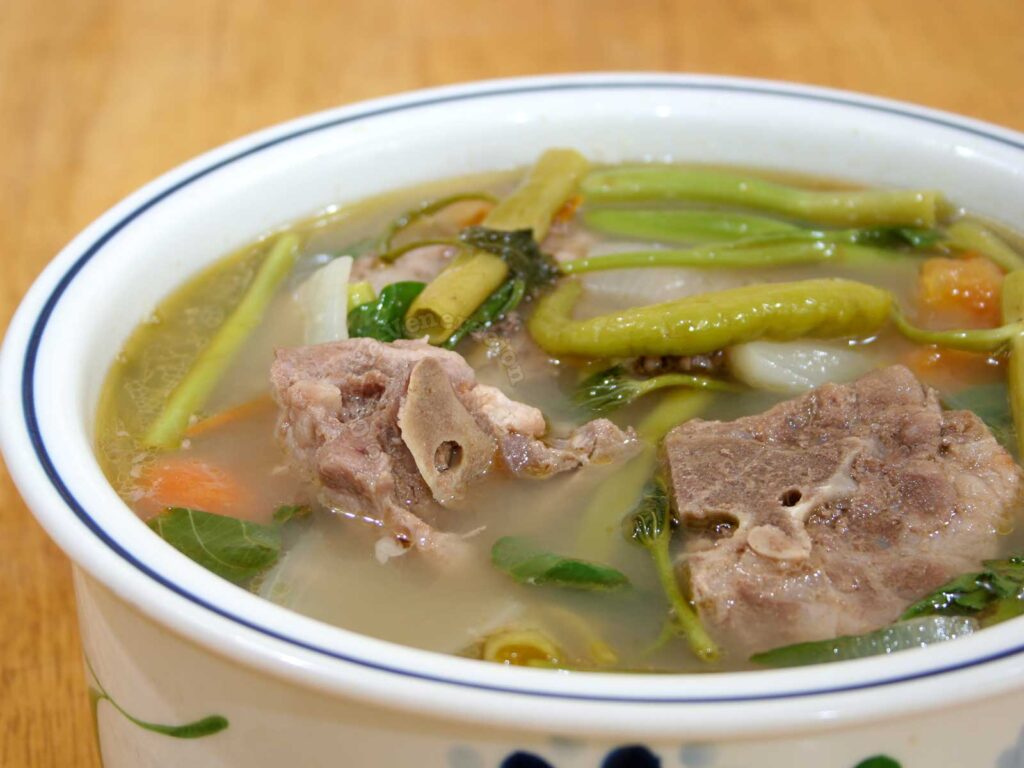
The vegetables traditionally used with sinigang are kangkong, talbos ng kamote, sitaw or sitao (yard-long beans) taro, eggplant, okra and green chili.
Kangkong (water / swamp spinach) is a green leafy vegetable that grows in swampy areas.
Talbos ng kamote refers to the tender leaves of the sweet potato. Taro is an edible rootcrop with white flesh. Where kangkong and talbos ng kamote are not available, spinach or mustard leaves are good substitutes. I said OR because I have never tried using both at the same time.
The protein
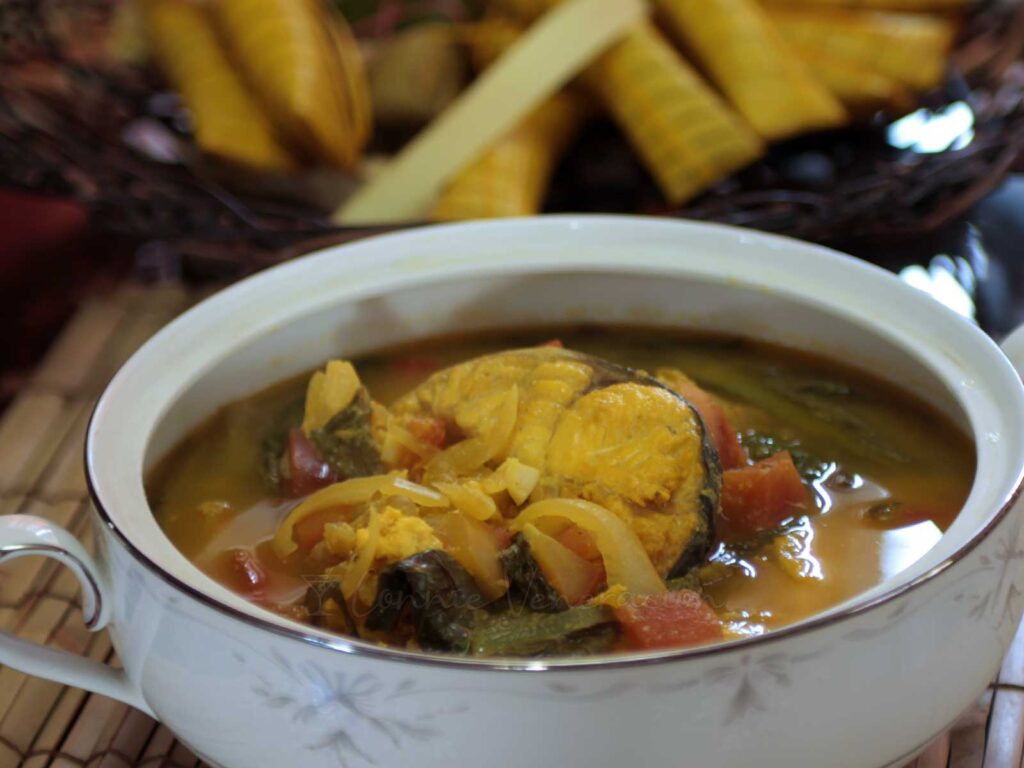
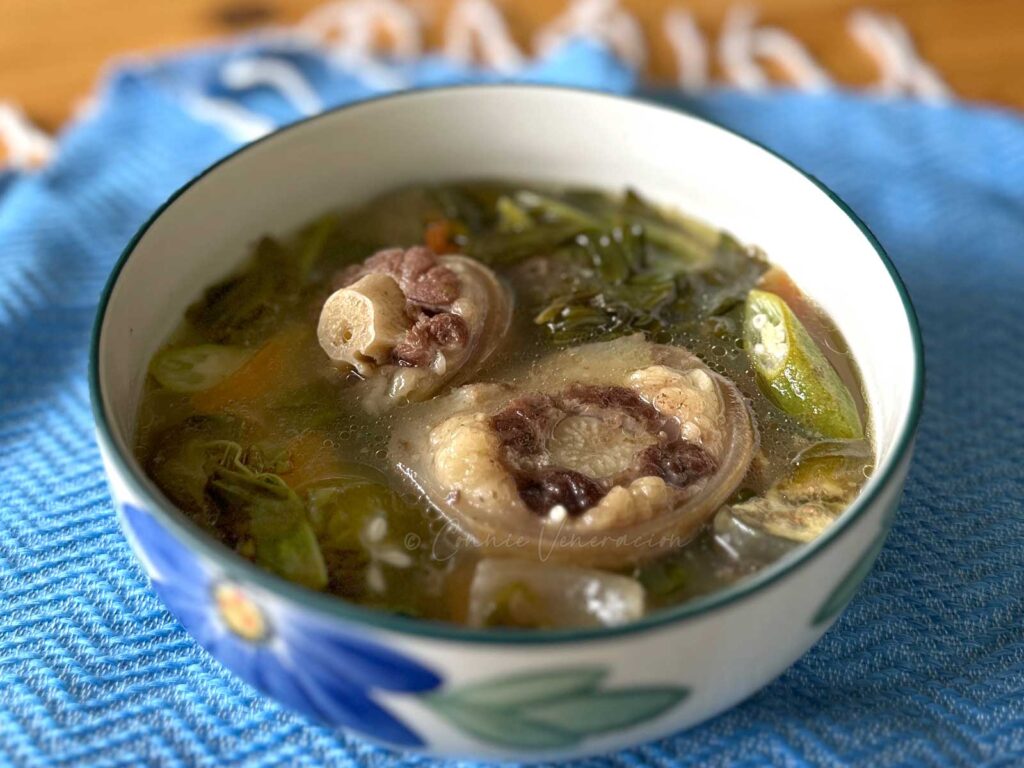
Meat or seafood. The most traditional meat for sinigang is pork tail. Pork ribs comes a close second. It’s milkfish, bone-in and sliced, if you want seafood. Or unshelled prawns with heads and tails intact.
But that’s being traditional. There are so many ways to cook sinigang and, over the past decade, cooks’ creativity has expanded the sinigang universe exponentially.
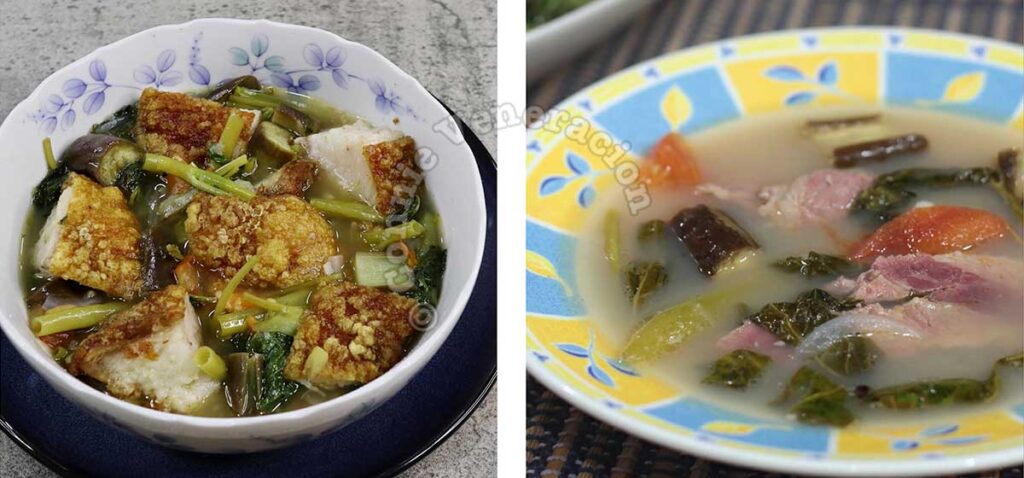
The eternal love affair of Filipinos with crispy pork belly gave birth to a sinigang cooked without meat, and cubes of crispy pork belly are dropped in just before serving so that the puffed rinds stay crisp when the serving bowl lands on the dining table.
Outside the world of humble eateries, there’s corned beef sinigang. Not canned corned beef, mind you, but chunks of cured beef. Because it’s pricey, corned beef sinigang is not something you can order in carinderias and cafeterias.
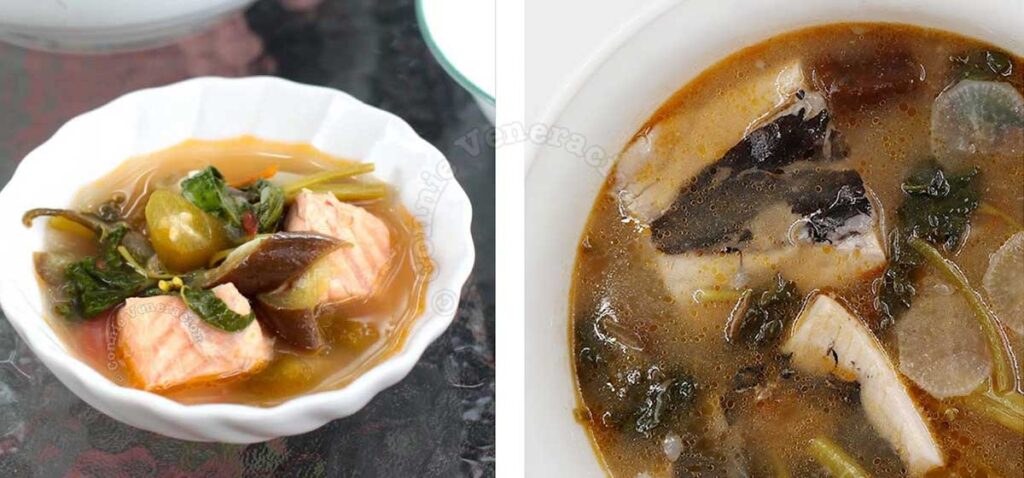
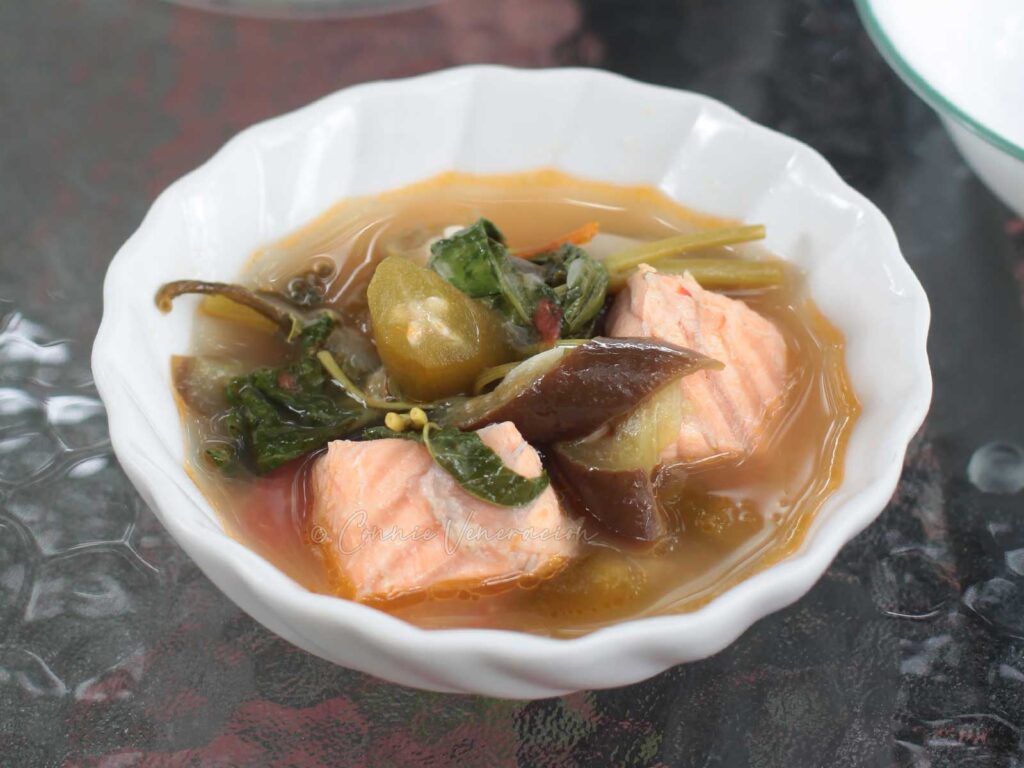
When it comes to seafood, bone-in milkfish (I don’t know of any fish with more bones than milkfish) has been replaced with boneless belly.
Salmon belly sinigang, first introduced by a local restaurant, is now in the repertoire of many home cooks.
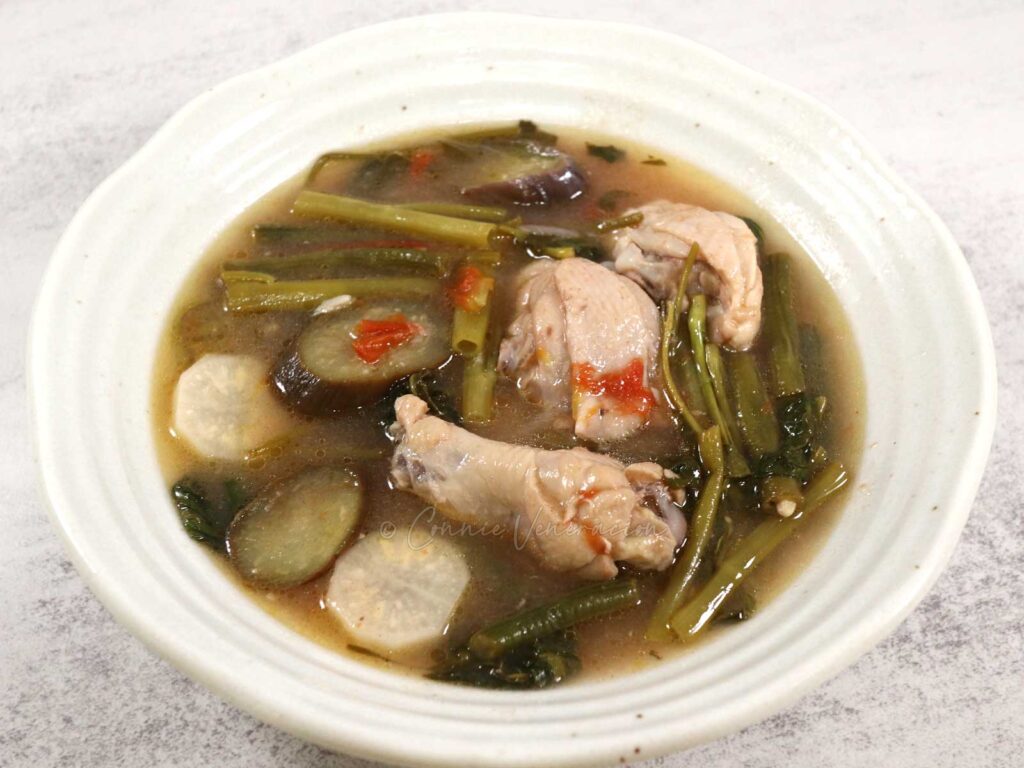
The list goes on, really. For as long as the soup and vegetables are cooked the way sinigang has always been cooked, what meat or seafood is added to the mix can be anything.
The souring agent
The broth is seasoned with a souring agent to give the soup its characteristic flavor. Tamarind extract is the most common but guava, kamias (bilimbi), unripe mangoes or other sour fruits can be used too.
Tips for cooking sinigang
When making sinigang, cook just enough for one meal. It never tastes good after it has been refrigerated and reheated.
Rice washing
Sinigang is traditionally prepared using rice washing, instead of plain water, to start the soup. Unless you are very sure about the sanitary conditions under which your rice was packed and bought, I really won’t recommend this. Since the purpose of using rice washing is mainly to thicken the soup and to give it a cloudy appearance, the same results can be achieved by including taro among the ingredients.
How to cook the vegetables
You don’t have to add all the traditional vegetables. Choose the vegetables you want to add to the soup or stick with what you have access to.
Don’t dump the vegetables into the broth at the same time. Always start with the one that takes longest to cook. Drop in the rest at five minute intervals and always tasting the broth after each addition to check if seasonings need to be adjusted.
If using eggplants, slice just before adding them to the soup; otherwise they will discolor. Some people soak sliced eggplant in salted water purportedly to get rid of its “bitterness”. I have never done that since I find no “bitter” taste to get rid of — Asian eggplants are sweetish.
Choose your sinigang


 Almusal: breakfast in the Philippines